
Sustainability is no longer a nice-to-have. It’s essential for our planet’s future. To meet customer…
False alarms at commercial premises — How to prevent them
Nobody wants to be woken by an alarm in the early hours of the morning, least of all when it’s a false alarm.
Aside from the irritation of false alarms, there’s the exorbitant cost to British businesses. According to the Fire Industry Association, it’s upwards of £1 billion a year.
The problem also has serious consequences. Nuisance alarms divert resources away from genuine emergencies — and after a while, alarms which repeatedly cry `wolf’ will be ignored, even when the wolf is real.
In this article, we explore the most common causes of false fire and security alarms at commercial premises. We also share some useful advice on how they can be prevented.
Poor installation
If you’re getting a lot of false alarms, it could be down to inadequate wiring, faulty connections or a poor job with the system installation.
In short, the sensors and detectors may be in the wrong place.
Every commercial site is different, and each will have its own risks, requirements and environmental conditions. These need to be taken into consideration because a cookie-cutter approach will invariably lead to issues with false positives.
Solution — Your first step should be an inspection by trained professionals. They will quickly spot the cause of the recurring problem and can offer expert advice on how to fix it.
Human error
Many false alarms are down to simple human error.
An employee burns the toast or inadvertently strays into the wrong part of a building. They may forget to lock a window, or they’ve set the alarm and waited too long before leaving.
Everyone makes mistakes, but when errors lead to an unnecessary emergency call-out, you’ll want to keep them to a minimum.
Solution — Carry out staff training and issue guidelines on what can potentially trigger an alarm. Authorised employees can be trained in arming, disarming and bypassing the alarm system.
Additionally, everyone should know which parts of the property they are allowed to access and which areas are restricted.
Lack of maintenance
Prevention is better than cure, so regular servicing and maintenance is a crucial step towards reducing the risk of false alarms.
Having said that, some maintenance checks won’t require an expert — checking batteries, for example. Sensors can malfunction when the batteries are running low. Simply refreshing them on a regular basis can spare you from a false alarm.
Schedule regular cleaning to remove dust and cobwebs. They can interfere with motion sensors and smoke alarms. Also, make sure that windows and doors can close tightly. If they’re loose, sensors pick up the movement and trigger an alarm.
Solution — Your alarm system should be checked at least once a year by a reputable security company. They’ll service the system, check cables and batteries, and make sure everything is working as it should.
Sensors in the wrong place
Sensors in the wrong place is one of the most common reasons for nuisance alarms. Again, it’s down to poor installation.
A fire detector is fitted directly over a cooking area. A motion sensor keeps being triggered because it’s next to an air vent, or near blinds and curtains.
As well as sensor placement, installing the right system is key. For example, fire detectors can be triggered by high humidity and steam. Therefore, in a workplace where this can’t be avoided, such as a professional kitchen, you’ll need technology that’s designed to cope with the conditions.
Solution — If alarms are being triggered repeatedly, ask a professional to pinpoint the offending sensors and reinstall them in a less troublesome location.
Generally speaking, seek expert help on the best system and sensor placement for your specific commercial property.
Electrical interference
Visible interference is one thing, but what about invisible factors? Electromagnetic fields and radio frequencies can also affect alarm sensor signals.
Most workplaces rely on complex technical infrastructures, all supported by a maze of wiring. This can lead to a cacophony of electrical noise and interference with the alarm system.
Solution — The obvious remedy is moving sensors and fire detectors away from the source of the electrical interference, but this is easier said than done. The root of the problem isn’t always clear.
Again, ask for professional help. A trained security engineer can advise you how to avoid electrical interference, and how to future-proof your alarm system as new technology is introduced into the workplace over time.
The weather
Alarm sensors can be confused by sudden changes in temperature. While modern alarm systems tend to remain stable when the weather changes, it can trigger older systems into a false positive.
Also, bear in mind that extreme cold and high winds can cause power cuts. If your batteries are faulty or not fully charged, when the power cuts out an alarm will be activated.
Solution — The older the technology, the more likely it is to go off without good reason. Newer alarm systems are more robust, designed for extreme weather — and they’re `smart’ enough to avoid triggering unnecessarily.
This leads us on to one of the most common causes of false alarms.
Outdated technology
You don’t have to put up with multiple false alarms. These days, alarm systems come with hyper-responsive smart technology which can differentiate between real threats and false alerts.
They can tell the difference between a passing badger and a human intruder, burnt toast and a real fire.
As well as false alarm prevention features, today’s technology includes remote arm and disarm capabilities. You can be notified via your mobile phone and, within seconds, access the CCTV live feed. If you’re certain the alarm is an error, just switch it off remotely.
24/7 professional alarm monitoring
Another solution to the irritation of false alarms is opting for professional alarm monitoring. It takes the problem off your shoulders.
This is particularly important for businesses operating in counties such as Kent, where remote or lightly staffed commercial premises can lead to delayed response if alarms aren’t actively monitored.
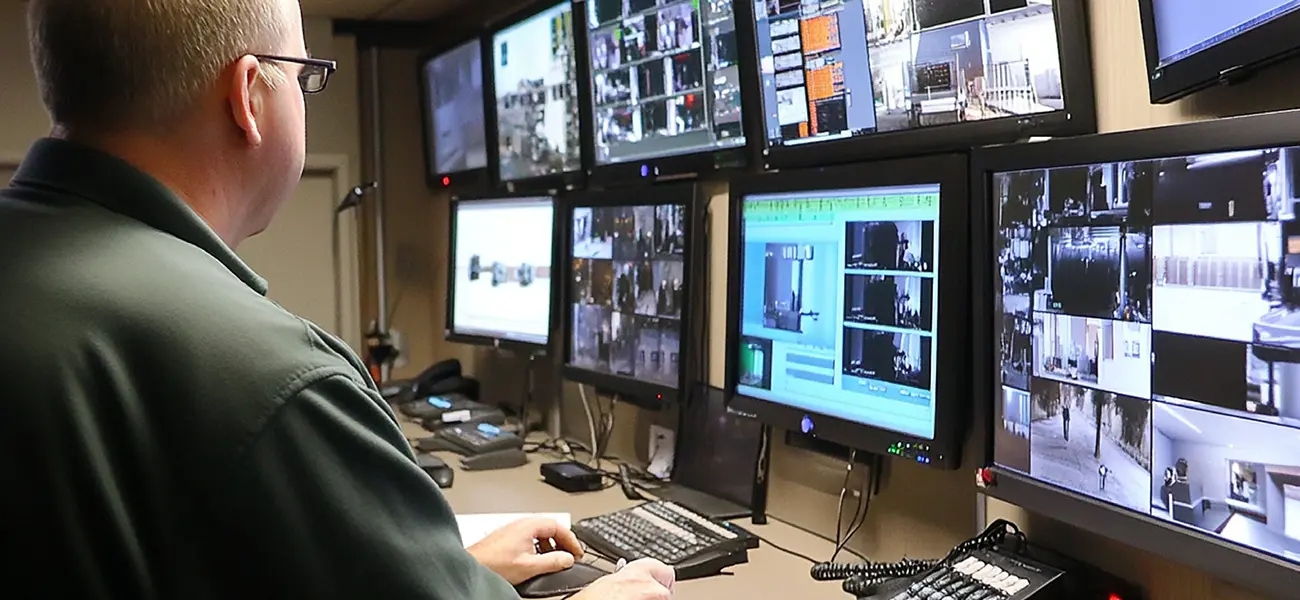
At our alarm receiving centre, trained responders monitor all alerts. If an alarm is triggered, it’s instantly picked up by a professional who will investigate whether it’s false or a genuine trigger. If it’s confirmed as false, they can quickly turn it off and notify the authorised keyholder. If it’s genuine, they will instigate a rapid response.
For more information on how to solve the problem of false alarms, get in touch with the team at Classic Services Group.
Related Posts


