
Sustainability is no longer a nice-to-have. It’s essential for our planet’s future. To meet customer…
8 Common Misconceptions About Security Officers
When you think of a security officer, what’s the first picture that springs to mind? For many people, it’s a hefty and intimidating non-communicative bloke with large biceps wearing a kevlar vest.
There are currently 148,200 security officers working in the UK. They’re everywhere, yet most of us barely notice security staff — until we need their help.
It’s easy to have misconceptions about security personnel, and about the role they play in our lives. In this article, we explore the 8 most common misunderstandings about security officers.
1) They are uneducated and untrained
There’s a common assumption that security staff are uneducated and untrained.
In fact, security personnel in the UK undergo extensive training. To obtain a Security Industry Authority (SIA) licence, they need to demonstrate a comprehensive range of skills for facing any challenge and dealing with it efficiently.
Communication, emergency response and dispute resolution are just a few of the skills they have to master before qualifying as a professional security officer.
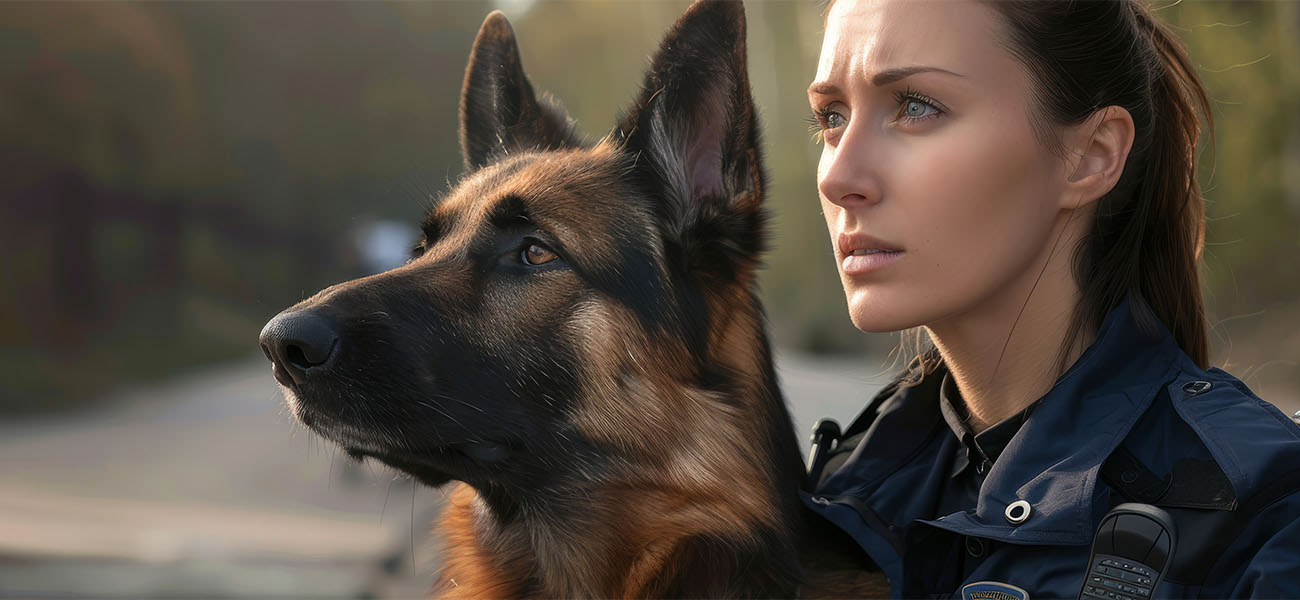
In addition, many undergo further specialised training — for example, those in K9 security who work as a formidable team alongside highly-trained dogs.
2) Security officers are aggressive
A major aspect of the role is keeping a cool head in potentially volatile situations. The majority of professional security staff are keenly aware that aggression will make things worse.
In any conflict situation, it’s the calm attitude and tone of the security officer which makes the difference between violent escalation and peaceful resolution.
Often working under pressure, they have to react quickly and communicate unambiguously. Whether it’s evacuating staff from a building, dealing with an intruder or supporting someone who’s been injured, remaining in control is part of the job.
This brings us on to the next misconception.
3) They are not good with people
Good people skills are crucial for security personnel. They are, in effect, part of your customer service team.
Many security officers are specifically trained to work `front of house’ as the first point of contact for visitors. In an office environment, they interact with employees every day.
Respect, politeness and an ability to empathise are key aspects of the job. Understanding someone’s point of view is by far the most effective way to resolve conflict. It defuses the situation before it escalates.
There is a fine line between courtesy and firmness, and security officers have to maintain a delicate balance between the two — a skill which requires a high degree of emotional intelligence.
4) They can’t deal with a medical emergency
First aid training is a legal requirement for security staff in the UK. To hold an SIA licence, they must have completed the Level 3 FAA First Aid at Work qualification.
Amongst other things, security officers can perform resuscitation and CPR, apply tourniquets and haemostatic dressings to prevent blood loss, and they can save someone’s life through the correct use of a defibrillator.
Security staff are often the first on the scene in a medical emergency. It’s important for them to know how to administer first aid.
5) They are only needed for high-risk areas
It’s tempting to think that security staff are only needed in areas at high risk of crime and anti-social behaviour.
In reality, they can be deployed in a wide variety of spaces — festivals, corporate events, office buildings, residential areas… Any situation where it’s important to maintain a safe, friendly atmosphere.
This is particularly true for businesses operating in counties such as Sussex, where security officers are often required to balance visible deterrence with approachability across a wide range of commercial environments.
6) They can’t be leaders
Good security officers make excellent leaders. It’s an essential skill, particularly when it comes to crowd management during an emergency.
When it comes to guiding others safely through a dangerous situation, cooperation is crucial. To persuade a crowd to cooperate during a crisis, the security officer must rapidly gain their trust. As any leader knows, trust-building is a major aspect of any leadership job.
Effective leadership and strong teamwork go together. While security officers sometimes work independently, they are also required to work as a team.
Robust security is a collaboration between the security company, other members of the security staff, the property owner, and, where necessary, the emergency services.
7) It’s always a bloke
It has to be said that the world of security is still male-dominated. However, in 2024, there were 47,124 SIA-accredited female security officers active in the UK — and it seems that number is likely to rise.
Brute force is no longer the primary tool of the trade. According to the World Security Report, 9 out of 10 respondents said that people skills are more important than physical strength when it comes to frontline security staff.
These days, it’s often about intelligence-led security and softer skills — areas where women often outperform their male colleagues.
8) Security staff are too expensive
We’ve left this one until last, even though it’s by far the most common misconception.
Employing a professional security officer is no longer an expensive luxury reserved for large organisations. Nowadays, there are a number of flexible, affordable options available.
For example, you can hire security staff on a temporary basis — just a single day for a one-off event. Alternatively, mobile security officers can be deployed at particular times of the day.
It’s about finding a solution which best suits your needs and, importantly, fits within your budget. If you’d like a no-obligation chat about affordable options, we’d love to hear from you. Get in touch with the CSG team here.
Related Posts


